Louis E. Miles
Chesapeake Bay Maritime Museum, Uncurated Search Results
Type: Skipjack
Year:
Builder:
Location:

These records are found in the collection of the Chesapeake Bay Maritime Museum in St. Michaels, Maryland. Uncurated search results are presented to give researchers and interested readers an idea of whether CBMM’s archives contain information about this vessel and whether it may be worthwhile to contact CBMM for further investigation. Uncurated results may be inaccurate or incomplete.
For more information about these items, contact the CBMM curator at collections@cbmm.org, or use the selection buttons below to submit a research request.
Search mode: Exact Name. Search phrase(s): "Louis E. Miles"; "Louis E Miles". Results returned: 6. Results displayed in this table: 6.
Use these buttons to send uncurated search results to your own app or text document for further research. First, check the box for any row, or click "Select All" then uncheck any rows. Then click "Show Selections". You can then copy your selections from the text box and past them into your app.
| Fetch? | Row ID | Catalog # | Object Name | Title | Artist/Maker | Date Made | Place Made | Description | Full Image | CBMM Cat. Page |
|---|---|---|---|---|---|---|---|---|---|---|
| 1 | 8888.0044.0000 | documents | Oystering Ephemera Collection | An artificial manuscript collection of materials relating to the oyster industry in the Chesapeake Bay there are 2 series in this collection from different sources.<br /><br />The Series 1 collection consists mostly of letterheads, billheads, price lists, trade cards, labels, and related items, including correspondence for a large number of oyster and seafood packing houses, some of which also dealt with fruit packing. Many of these companies were based in Baltimore, Maryland, but packers in Virginia, Massachusetts, and Connecticut are also represented. Other items in the collection include envelopes, checks, mailing tags, receipts, advertisements, recipe booklets, and ledgers.<br /><br />The Series 2 collection includes photographs and stereoviews, oyster advertising material, restaurant menus, trade cards, comics, sheet music, post cards, business receipts, and books/booklets. The collection is organized by category, Chesapeake related, and general oyster material and was collected by Michele and Clifford Krainik. | 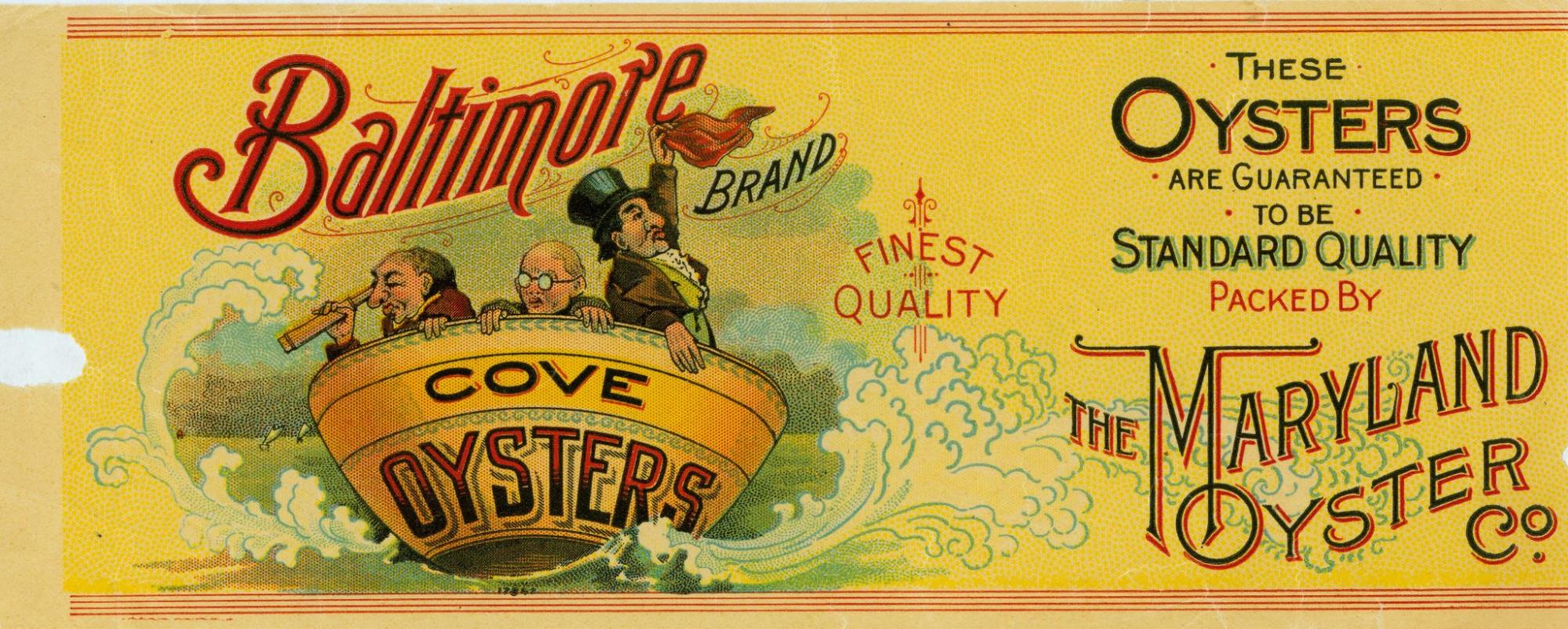 | View | ||||
| 2 | 8888.0175.0000 | documents | MS 175 Ed Thieler Papers | Thieler, Edward R | Collection of materials related to Ed Theiler's model making and nameboard carving. | No image URL. | View | |||
| 3 | 8888.0111.0000.00 | manuscript | Thomas Gillmer Manuscript Collection | This collection begins on CSC 16B2 and continues onto CSC 16B3.Background:Thomas Gillmer (1911-2009) was a naval architect whose designs include both historic vessels and cruising sailboats. He is perhaps best known for his work on the Baltimore clippers Pride of Baltimore and Pride of Baltimore II, the former having attracted national attention when she tragically sank off Puerto Rico in 1986 ( the subsequent investigation determined extreme weather rather than poor design or seamanship was at fault). Gillmer's other historical designs include the pungy schooner Lady Maryland and the Swedish pinnace ship Kalmar Nyckel. His cruising sailboats, in both wood and fiberglass, are also respected as elegant and seaworthy vessels. One, an Allied Seawind named Apogee, was the first fiberglass boat to circumnavigate the globe. In addition to his work as an architect, Gillmer wrote several books and articles on subjects ranging from ancient watercraft to the restoration of the USS Constitution, a project in which he was involved. Gillmer was a professor of naval architecture at the US Naval Academy and later served on the Chesapeake Bay Maritime Museum's Board of Governors and as chairman of the curatorial committee. Scope and Content:The manuscript collection consists of 156 files in 5 boxes. Files are grouped together by subject as follows:Box 1: Historical VesselsBox 2: Designs and ProjectsBox 3: Academic Work and PublicationsBox 4: CorrespondenceBox 5: ScrapbookIn most cases, papers are arranged chronologically within each folder. | No image URL. | View | ||||
| 4 | 1999.0002.0001.00 | models | Builder's half model of Quadrant class sloop, moun | Hartge, Laurence W __Creator | Range, Exa 01/01/1952 - 01/01/1953 | Hartge Yacht Yard - Galesville - MD | Builder's half model of Quadrant class sloop, mounted with two screws onto masonite back board; hull painted red and white, grey sails and red keel and rudder paitned onto backboard; in pencil "ORIGINAL/ QUADRANT/ MODEL/ WINTER/ 1952-53/ 1ST QUADRANT BUILT 1953/ L HARTGE/ 1952"; 3 holes for mounting to wall. Laurence Hartge was known for conceiving "economy yacht" style vessels to make these vessels more easily available to sailors. The Quadrant Class sloops were deemed to be Condition: Paint worn in places, surface dirt, corners of backboard chipped. Material: Wood (pine?), masonite, paint, screws. Made by donor-designer of Quadrant class sloop built by Hartge Yacht Yard. | 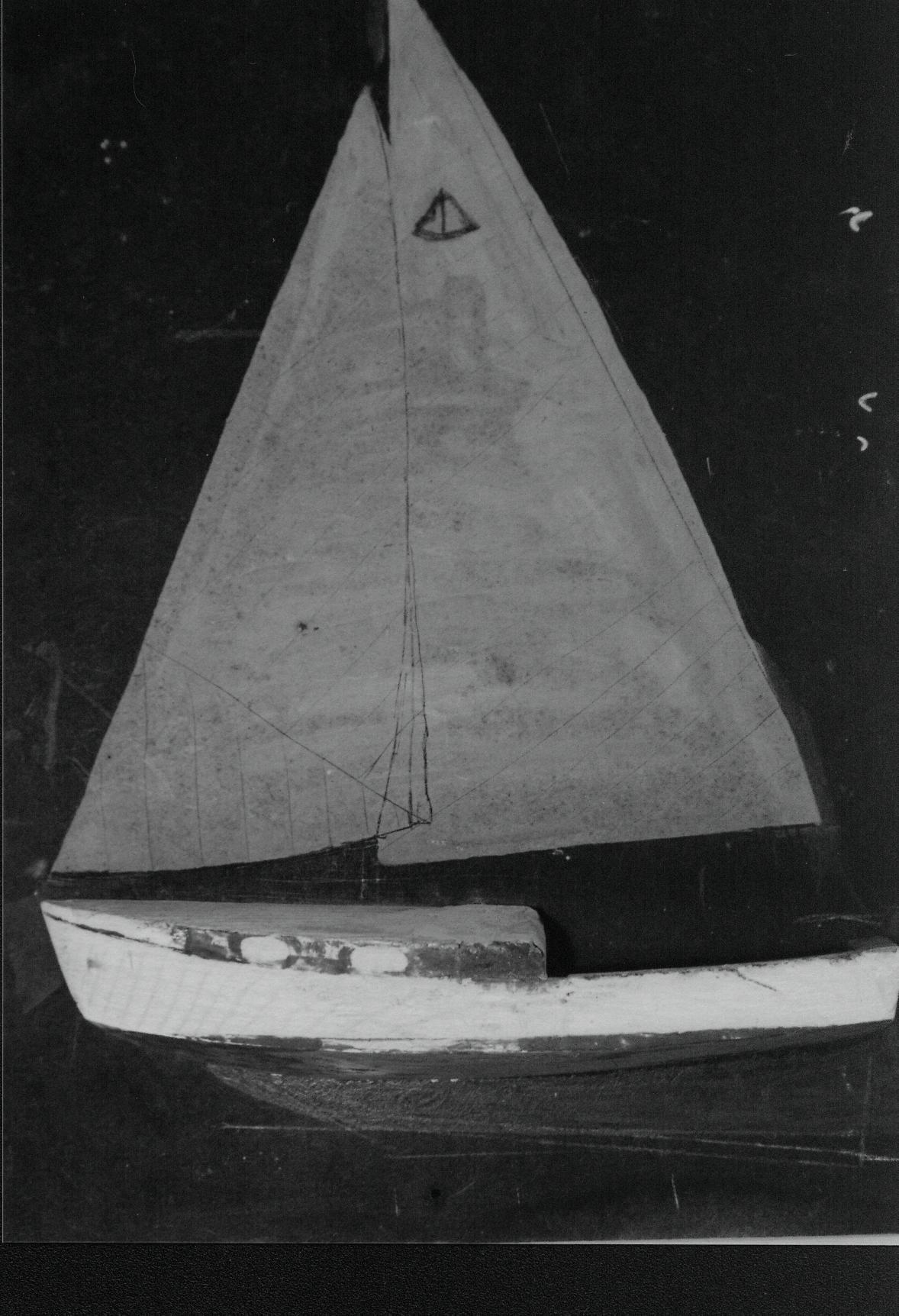 | View | |
| 5 | 0000.1100 | photographs | Herman Hollerith, Jr. (1892-1976) Photo Collection | 1890-1970 | This is a collection of many photographs, which have not been cataloged individually. Please review the attachments for specific information on the images. <br /><br />Herman Hollerith, Jr. (1892-1976) Photo Collections (1890s--1970s) Biographical Background: Herman Hollerith, Jr. was born in 1892 at 3112 Q St., Georgetown, District of Columbia to Herman Hollerith, Sr. and Lucia Talcott Hollerith. His father invented the punch-card tabulating machine. He sold his company in 1911 to a firm that later became IBM. Other Hollerith children were Nan, Richard, Charles, Virginia and Lucia. The family lived in Georgetown, Garret Park and Montgomery County. In 1908 they bought a summer home in Mathews County, Virginia named Brighton. They spent their summers at Brighton from 1909. The family had a number of boats which were kept at Brighton: a New England dory named LUVINA; a flat bottomed power workboat named BRIGHTON; a 45 foot, gas powered yacht named REGINA, which was later renamed LUVINA and later still renamed MATOAKA, and an 85 foot vacht named LUVINA. The name Luvina was derived from the three daughter's names, Lucia, Virginia and Nan. Herman Hollerith, Jr. attended Worchester Polytechnic College with his borther, Charles, and received an engineering degree in 1917. He worked at the Naval Aircraft Factory in Philadelphia, and then at the Victor Talking Maching Company, where he was chief engineer and production engineer. During this time he lived in Riverton and Moorestown, New Jersey. He quit the Victor Talking Machine Company in 1928 when it was purchased by RCA. From 1932-1936 Hollerith was president of the Virginia Navigation Company and operated a small passenger steamer under contract to a large corporation. From 1936-39 he did not work during the Depression. In 1939 he moved to Baltimore to work for the Glenn L. Martin Company where he was involved in building airplanes during WWII. Hollerith worked until he was 69 years old. He was married twice. He and Sarah Valentine Fox had four children and were divorced in 1936. In 1938 he married Elisabeth C. Guest. In 1954 he bought a house near Oxford, Maryland and retired there in 1961. Hollerith was active in the early days ofnthe Chesapeake Bay Maritime Museum and was instrumental in the move of the Hooper Strait Lighthouse to the grounds. Hollerith had a love for boats and owned the ERIC, launched in 1925, until his death. This sailboat was an Atkins design based on a Norwegian ketch. ERIC was the prototype of the Westsai1 32. Hollerith died in 1976. For more information about the Hollerith family researchers should consult: HERMAN HOLLERITH: FORGOTTEN GIANT OF INFORMATION PROCESSING, by Geoffrey D. Austrian; NY: 1982, Columbia University Press. Scope and Content: This collection consists of photos taken or collected by Hollerith. The bulk of photos were taken by Hollerith of scenes from 1915-1940. They feature steamboat and sailboat scenes on the lower Chesapeake. Many of the photos were taken on cruises around Mathews County, Va. Some photos (especially M series negatives) were collected by Hollerith and taken by his father and brothers. The photos depict the agriculture life of the lower western shore and often show the introduction of power. Many of these photos have been published. The water was an important focus for life in Brighton. Mrs. Elisabeth Hollerith supplied a quote from Hollerith about life in Brighton: We did everything by boat, used the daily steamer from Norfolk for transportation to and from Washington and for most supplies including ice. Met the steamer at one of the wharves on the East River each day to pick up mail, visiting friends, etc. The roads were so bad we rarely went inland. Went to church and to visit our friends in a motor boat. In addition to the following subject indices, the researcher should note that Hollerith had his own subject indices. These are available to researchers and especially useful in looking for boat names. They are stored with the negatives. Subjects:Airplanes; Caribbean; C & D Canal; Eastern Shore; Hollerith, Herman, Jr.; Log canoes; Mathews county, Va.; Old Point Comfort, Va.; Sailboats, commercial; Seafood Industry; Steamboats, Chesapeake Bay; Washington, DC; workboats, Chesapeake Bay. Subject: Herman Hollerith Jr | 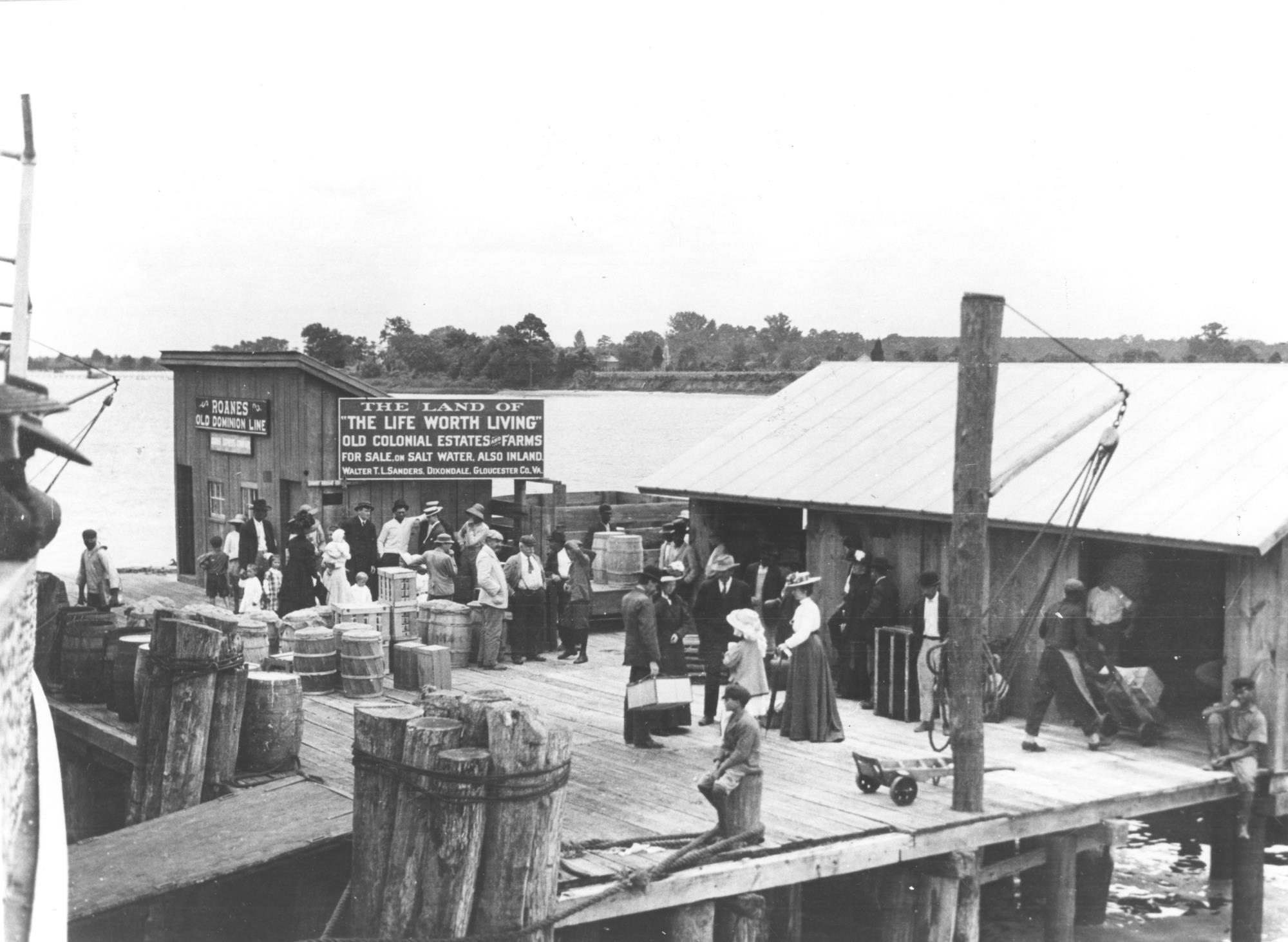 | View | |||
| 6 | 1985.0005.0001.00 | steering wheels | Wood steering wheel reportedly from the sidewheel | Wood steering wheel reportedly from the sidewheel paddle steamer RIVER QUEEN. The wheel has 10 spokes connected to the metal brass hub. On the outer ring there are 10 inlaid metal stars and 10 inlaid wood diamonds. The RIVER QUEEN was built in 1864 and was used by President Lincoln during the Civil War. Condition: The ends of 3 spokes are loose and had been repaired at an earlier time, heavily varnished & discolored. Material: Oak? with metal hub, brass. | 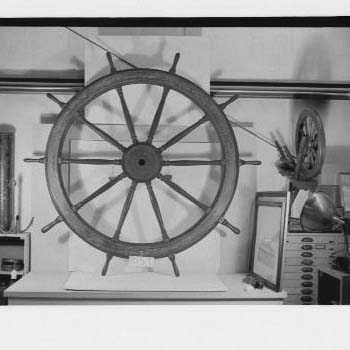 | View |
Created 2026 by Don Barker, CBMM volunteer, for the Chesapeake Shipbuilding Project. shipbuilding@sailingworkboats.es